
NEWS
Amid international concern that the two-month-old ceasefire is at risk of collapse, Donald Trump is determined to move to the far more complicated second phase of the agreement, which includes Hamas’ disarmament, the beginning of reconstruction, and the establishment of post-war governance. At the center of the new plan for administering Gaza is the creation of a “Board of Peace” to be led by Trump and other world leaders.

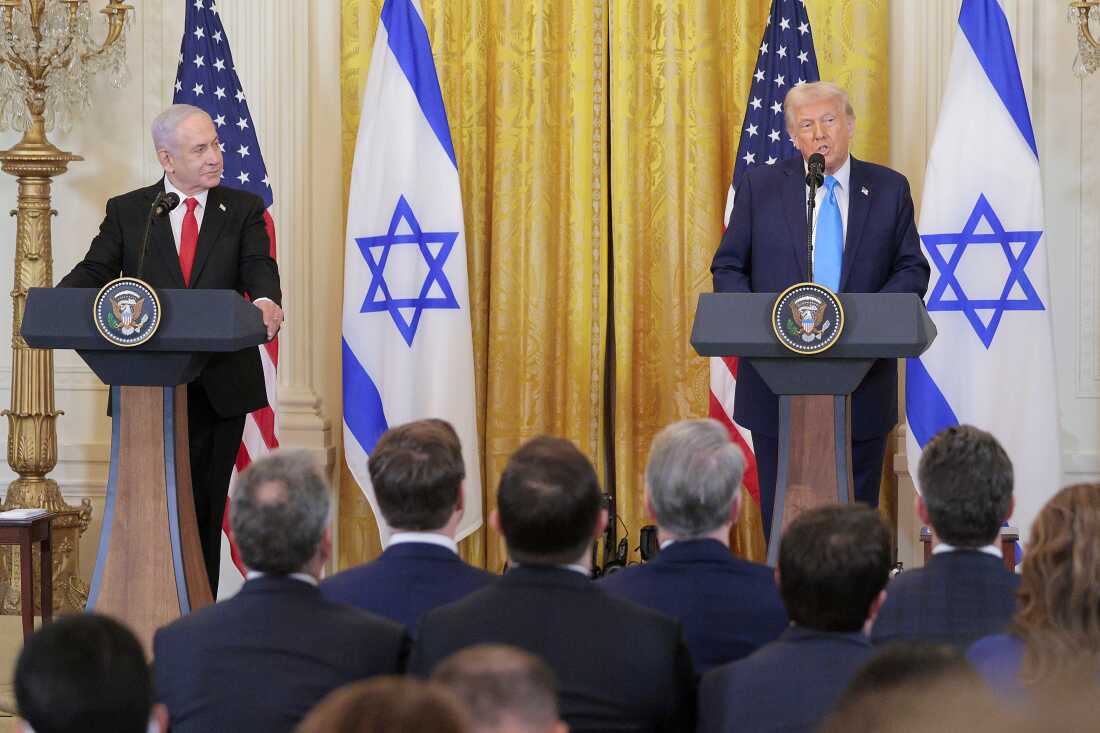
President Donald Trump’s Gaza ceasefire plan is set to enter a new phase within weeks, but crucial pieces of the agreement remain undefined as Israel tightens its military grip on the battered enclave.
With the return of all but one of the deceased hostages held by militants – and questions about whether Hamas will even be able to locate the last set of remains – the first phase of the 20-point plan is verging on completion.
Now, amid international concern that the two-month-old ceasefire is at risk of collapse, Trump is determined to move to the far more complicated second phase of the agreement, which includes Hamas’ disarmament, the beginning of reconstruction, and the establishment of post-war governance. At the center of the new plan for administering Gaza is the creation of a “Board of Peace” to be led by Trump and other world leaders.
It’ll be one of the most legendary boards ever. Everybody wants to be on it,” Trump said at the White House on Wednesday.
Despite Israeli Prime Minister Benjamin Netanyahu’s public embrace of the deal in September, significant gaps remain between the US and Israel. The US is pushing to move quickly into the next phase, but Israel is conditioning major steps on the return of the final deceased hostage and has been resisting US efforts to resolve a standoff with a pocket of isolated Hamas militants in the Israeli-occupied parts of southern Gaza.
“Much (of the second phase) is left open to interpretation, which, in the Middle East is both the best and the worst thing,” an Israeli official told CNN.
Qatari Prime Minister Mohammed bin Abdulrahman al-Thani, along with Egypt and Norway, warned over the weekend that the ceasefire is at a “critical moment,” at risk of collapse as mediators try to make progress. “It’s not yet there, so what we have just done is a pause,” al-Thani said at the Doha Forum on Saturday.
While the Trump administration is ready to begin rehabilitation and reconstruction of the enclave, Israel remains focused on disarming Hamas and the demilitarization of Gaza – a key component of the agreement, but one that has no clear path forward.
“The question is whether, in the meantime, Hamas remains there, and that’s it – we just get used to it and accept it,” a second Israeli official told CNN. Trump, the official said, wants to see progress before Netanyahu visits Mar-a-Lago, the president’s private estate in Florida, at the end of the month.
The US is also still working to finalize key details ahead of a potential phase two announcement, including the makeup of the international security force called for by the plan and the Board of Peace that would oversee Gaza’s governance, a US official said.
Two months in, the ceasefire has been tested repeatedly, with both Hamas and Israel accusing each other of violating the agreement. Nearly 400 Palestinians have been killed by the Israeli military since it went into effect in October, according to the Palestinian Ministry of Health. The Israeli military says three of its soldiers were killed by Hamas militants in that same period. And human rights groups have accused Israel of failing to uphold its commitments regarding the flow of humanitarian aid and blocking essential supplies, like tents, from entering the strip.
On Sunday, Israeli military chief Lt. Gen. Eyal Zamir said Israeli forces will remain on the so-called yellow line inside Gaza, to which they retreated as part of the truce, referring to the frontier as a “new border line – serving as a forward defensive line for our communities and a line of operational activity.”
The Israeli military occupies more than half of Gaza but is required to withdraw completely in subsequent phases of the agreement. According to the deal, Israel is prohibited from permanently occupying or annexing the enclave.
Meanwhile, the US has pressed Israel to open the Rafah crossing between Gaza and Egypt, which was supposed to restart operations as part of the ceasefire agreement. But Israel said in October it would remain closed “until further notice.” Earlier this month, Israel announced it would open the crossing only in one direction, for Palestinians to leave Gaza, but none would be allowed to enter, sparking outrage from Arab and Muslim nations who called the move an attempt “to displace the Palestinian people from their land.” Ministers in Netanyahu’s right-wing government have repeatedly advocated for the “voluntary” emigration of Gaza’s residents and the settlement of Jews in their place.
The US has been working to resolve the dispute, and Secretary of State Marco Rubio was expected to raise the issue with his Israeli counterpart on Wednesday, a US official said ahead of the meeting.
An Egyptian official attributed the lack of progress on the next phase to the chasm of distrust between Israel and Hamas. “Every point in it is tied to internal calculations on both sides,” the official told CNN. Political divisions – both within the Israeli government and amongst Palestinian factions – restrict the mediators’ ability to take meaningful steps on a series of issues, they added.
Phase two is not frozen because of one point,” the official said. “It is frozen because every step affects Gaza’s future, and the parties are not yet willing to pay the political cost of making a final decision.”
The foremost demand for Israel is the demilitarization of Gaza. The agreement calls for the decommissioning of Hamas’ weapons and the destruction of militant infrastructure.
On Sunday, a senior Hamas official said the militant group was “very open-minded” about what to do with its weapons.
“We can talk about freezing or storing or laying down, with the Palestinian guarantees, not to use it at all during this ceasefire time or truce,” Bassem Naim told the Associated Press in an interview in Qatar. The proposal appears to fall short of the disarmament clauses under the ceasefire agreement, and it’s not clear if Israel would accept anything else.









Amid international concern that the two-month-old ceasefire is at risk of collapse, Donald Trump is determined to move to the far more complicated second phase of the agreement, which includes Hamas’ disarmament, the beginning of reconstruction, and the establishment of post-war governance. At the center of the new plan for administering Gaza is the creation of a “Board of Peace” to be led by Trump and other world leaders.

Donald Trump says he will cancel all Joe Biden orders ‘signed by autopen’ and threatens ex-president Joe Biden with ‘perjury’ charges

I hope he loses’: Donald Trump blasts Indiana Republican senate leader after his state redistricting effort gets blocked –as it happened

Donald Trump Pardons Ex-Clerk He Calls an “Innocent Patriot,” Using the Move to Boost His False 2020 Election Claims — a Strategy He’s Repeating with Recent Symbolic Pardons for Giuliani and Meadows, Heightening Political Tension and Suspense.

Serena Williams Unleashes Goddess Energy: Queen of the Court Owns the Beach in Jaw-Dropping Bikini Power Move!
Ronda Rousey Reportedly Lashes Out: “I Could Kill Most Men Barehanded” — Here’s What We Do and Don’t Know

SHOCKING: Chinese scientists uncover a chilling mystery in Antarctica’s forbidden zone — anomalous energy surges and a vast impossible structure beneath the ice spark urgent government meetings and fears that the truth could upend science and history

Diddy’s mother Janice Combs is breaking her silence after the release of 50 Cent’s new Netflix documentary “Sean Combs

Taylor Swift receives major news amid Travis Kelce’s disappointment and sadness

Exclusive: Paul Walker’s disturbing autopsy report emerges after 12 years of his death

President Barack Obama Marks a Heartwarming Milestone by Posting a Rare and Intimate Family Photograph to Celebrate His Younger Daughter Sasha Obama’s Joyous 24th Birthday, Offering Fans a Touching Glimpse into the Private World of America’s Beloved First Family Years After Leaving the White House
