
NEWS
Breaking: Democrats Clash with Trump Officials as Epstein Records Spark Capitol Hill Showdown – Congress Demands Full Transparency, Accuses Former Administration of Shielding Secrets; Republicans Split, Subpoenas Loom, Emergency Hearings Scheduled, Legal Battles Imminent, Tensions Escalate, Public Trust at Stake in High-Stakes Washington Transparency Fight Unfolding in Real Time.

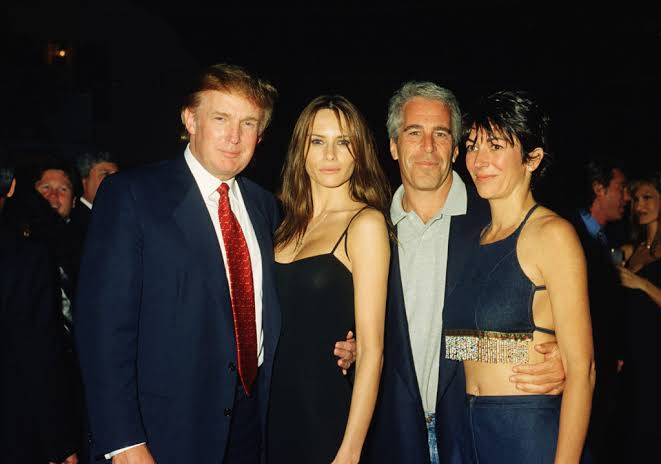
A fresh political confrontation erupted in Washington after reports emerged that some government records connected to Jeffrey Epstein may be withheld from public release. The revelation triggered swift and heated reactions on Capitol Hill, with Democratic lawmakers accusing officials tied to the Trump administration of attempting to block disclosure of politically sensitive materials.
According to lawmakers briefed on the matter, the disputed documents go beyond routine redactions normally used to protect privacy or ongoing investigations. Instead, they allegedly involve broader categories of records that could shed light on how federal authorities handled aspects of the Epstein case over several years. For Democrats, the issue strikes at the heart of congressional oversight and public accountability.
“After years of secrecy and unanswered questions, the American people deserve full transparency,” several Democratic leaders said, arguing that continued withholding of records would only deepen public mistrust. Committee chairs warned that blocking access to the materials could violate Congress’s authority to conduct oversight and may prompt aggressive legislative responses.
The controversy has also exposed divisions within the Republican Party. While some Republicans urged caution, citing legal constraints and privacy protections, others broke ranks to support disclosure. This group argued that transparency should not be filtered through partisan interests and that public confidence in federal institutions depends on openness, even when the political consequences are uncomfortable.
As tensions rose, discussions of subpoenas and emergency hearings quickly moved from speculation to planning. Lawmakers signaled that if voluntary compliance is not forthcoming, Congress is prepared to use its full legal powers to obtain the records. Legal experts say such a move could set off prolonged court battles over executive authority, congressional oversight, and the limits of disclosure.
The dispute has now escalated into a broader debate about how much the government owes the public in cases marked by long-standing controversy and mistrust. Beyond the Epstein files themselves, the clash is increasingly being framed as a test of Washington’s commitment to transparency and accountability.
With positions hardening on both sides, the coming weeks are expected to bring intense hearings, possible legal challenges, and continued political fallout. What began as a fight over documents is rapidly becoming a high-stakes transparency battle—one with implications that could reach far beyond Capitol Hill and reshape public confidence in the federal government.





Taylor Swift Reveals the Romantic Gesture That Helped Win Her Heart

Breaking: Democrats Clash with Trump Officials as Epstein Records Spark Capitol Hill Showdown – Congress Demands Full Transparency, Accuses Former Administration of Shielding Secrets; Republicans Split, Subpoenas Loom, Emergency Hearings Scheduled, Legal Battles Imminent, Tensions Escalate, Public Trust at Stake in High-Stakes Washington Transparency Fight Unfolding in Real Time.

🚨 BREAKING: Donald Trump Declares $1,776 “Warrior Dividend” for 1.45 Million U.S. Troops This Christmas President Trump stunned the nation today, announcing that more than 1.45 million U.S. service members will receive a special holiday bonus he calls the “Warrior Dividend,” funded by tariffs. “In honor of our nation’s founding, every soldier is getting $1,776—and the checks are already on their way,” Trump declared, sending shockwaves through Washington and the military community alike.

The announcement came with a heaviness fans immediately felt. After reports of a serious car accident in New York involving Lady Gaga began circulating, her family stepped forward with an emotional message meant to calm fears—but it only raised more questions. There were no graphic details, no clear timeline, just a request for privacy and a tone that suggested this moment was deeply unsettling. Fans around the world froze, replaying recent appearances and wondering how something so alarming could happen without warning. Some reports were quickly corrected. Others remained frustratingly unclear. What was confirmed was that the situation had shaken those closest to her, enough to break their silence in a rare public address. One line in the family’s announcement stood out, hinting that the days ahead may be critical—and that the full story has yet to be told. 👉 Read the full story👇👇

🚨🔥URGENT Donald Trump’s Plan To Steal The 2026 Election Revealed Donald Trump and the 2026 election are already playing out in public view. Legal battles are ongoing. Election rules are being challenged. Political pressure is visible, and statements about future voting processes are growing louder. None of this is hidden. It is happening now, step by step, in courts, in state offices, and on national stages. Supporters call it hard politics. Critics call it dangerous groundwork. What is clear is that the fight over how elections are run has moved from theory to action. Lawyers are filing cases. Officials are being questioned. Messaging is being sharpened to shape public trust before ballots are cast. No court has declared wrongdoing, but the struggle itself is real. With 2026 approaching, the battle for control of the system is no longer coming—it is already here, and the country is watching closely. Check out for the bombshell in the comment 👇👇

🚨 MEDIA MELTDOWN: Trump SUES BBC Over Defamation Battle With Global Consequences A media firestorm has erupted across the Atlantic. U.S. President Donald Trump has launched a stunning legal assault on the BBC, filing a defamation lawsuit that threatens to drag one of the world’s most powerful media institutions into a bruising courtroom showdown with global repercussions.

HOLY SH!T! Jasmine Crockett calls Brittney Griner a ‘SH!T’ after discovering the truth about her gender. In a surprising and controversial move, the Women’s National Basketball Αssociation (WNBΑ) has announced that it will implement mandatory S3X testing for all players starting next season. This decision comes amid discussions surrounding gender identity and inclusivity in women’s

Patrick Mahomes Undergoes knee Surgery, Begins Rehabilitation After Torn ACL

📢 TOP STORY: A fearless decision by Jackie Chan sent shockwaves through a film set when a high-risk stunt went terrifyingly wrong, turning controlled choreography into real danger within seconds. Witnesses say the legendary action star insisted on performing the sequence himself, pushing past concerns in a move that reflected both his trademark courage and the razor-thin line between spectacle and catastrophe. What followed was chaos—crew members rushing in, filming abruptly halted, and stunned silence replacing the usual buzz of production. The incident has reignited intense debate about risk, age, and the relentless standards Chan has held himself to for decades. Fans worldwide are now grappling with the same question echoing through the industry: has the icon finally reached a moment where bravery carries an unforgiving cost? 👉 Read the full story 👇👇

The CNN town hall was meant to be ordinary—until Donald Trump detonated the moment. On live television, he insulted Michelle Obama, calling her “dumb.” The room went cold. Social media exploded. CNN rushed to commercial. But the real response came fast. Within an hour, Congresswoman Jasmine Crockett was live on MSNBC—and she didn’t blink. She laid out Michelle Obama’s credentials: Princeton. Harvard. Global leadership. Then she turned the spotlight back on Trump, asking the question everyone was thinking: why does he fear intelligent, accomplished Black women? The clips went viral instantly. Interview after interview, Crockett dismantled Trump’s record—failed ventures, court battles, scandals—stacking them against Michelle Obama’s achievements. Then she delivered the line that stopped everything: “You think she’s dumb? Debate her. Name the time, topic, and place.” The challenge trended worldwide. Trump’s team went silent. Days later, the answer came. He wouldn’t debate. Analysts called it a retreat. Crockett became a national force. Her message was clear: bullies crumble when challenged.

BREAKING NEWS: Kansas City Chiefs tight end Travis Kelce stunned an elite audience with a message no one expected—and then reinforced it with decisive action. At a black-tie charity gala in Kansas City, surrounded by Fortune 500 executives, top NFL donors, and celebrities, Kelce stepped onstage to accept the National Community Impact Award. What followed was anything but a routine acceptance speech. He skipped polished pleasantries and spoke directly to the room’s power brokers. “If you are blessed with success, use it to lift others,” he said. “No one should celebrate victories while children lack opportunity. If you have more than you need, it doesn’t truly belong to you—it belongs to those who need hope.” The ballroom fell silent. Guests described a frozen moment—no applause, no smiles—just the weight of uncomfortable truth hanging in the air. Kelce wasn’t criticizing wealth; he was calling for responsibility. And he didn’t stop at words. That night, he announced he is donating all of his endorsement and off-field earnings this season to fund after-school programs, tutoring centers, and scholarships for underserved kids in Kansas City and his hometown communities—proving leadership means showing up, not just speaking out.
